

Açaí: From the Amazon to the World — Origins, Market Growth & Global Export Opportunities
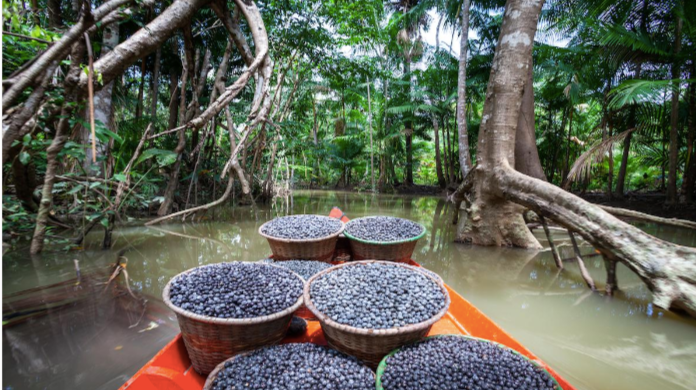
Few superfoods have captured global attention the way açaí has. What began as a traditional Amazonian staple—consumed by communities along the Rio Negro and Pará region—has transformed into a worldwide wellness phenomenon, fueling billion-dollar industries across the U.S., Europe, and Asia. Today, as demand continues to grow, opportunities for exporters have never been more promising.
The Amazonian Origins of Açaí
Açaí (Euterpe oleracea) is a purple berry native to the Amazon rainforest, long used as a source of energy, nutrients, and cultural identity. In the North of Brazil, açaí is not a smoothie bowl—it’s daily food, traditionally served with farinha, fish, or tapioca. The deep purple pulp, rich in antioxidants and healthy fats, forms part of the diet of riverside communities and indigenous groups who have harvested the fruit sustainably for generations.
Curiosities:
Açaí trees are actually palm trees, reaching up to 25 meters.
The berry is 90% seed; only the thin outer pulp is consumed.
Before becoming an international trend, açaí was mostly unknown in Southern Brazil.
Pará remains the world’s largest producer, responsible for over 90% of global supply.
The Superfood Boom: Açaí Goes Global
Açaí’s rise on the global stage began in the early 2000s as surfers, athletes, and wellness influencers discovered its nutritional power:
High antioxidant levels (especially anthocyanins)
Omega-3, 6, and 9 fatty acids
Natural energy boost
Low sugar and highly satiating
This positioned açaí as the perfect ingredient for:
Smoothies
Bowls
Protein shakes
Healthy desserts
Clean label snacks
By 2025, the global açaí market is projected to surpass USD 2.5 billion, with strong growth fueled by health-forward consumers.
Why Açaí Is a Prime Export Opportunity
As wellness trends expand, the demand for authentic, high-quality açaí pulp is increasing in:
🇺🇸 United States (the most important market)
Los Angeles, New York, Miami, and Austin are leading consumption hotspots. Açaí bowls have become a mainstream menu item across:
Juice bars
Coffee shops
Fitness centers
Boutique supermarkets
Vegan restaurants
Hotel cafés
In LA alone, most cafés serve 2–4 types of açaí bowls, creating constant demand for reliable importers and distributors.
🇪🇺 Europe
Germany, France, Portugal, and the U.K. are fast-growing destinations. Interest is rising in:
Organic açaí
Sugar-free formulations
Sustainable supply chains
🇯🇵 Japan & Southeast Asia
Japan loves açaí as a functional beauty food, while Indonesia, Singapore, and South Korea are adopting the trend among affluent urban consumers.
Forms of Açaí in International Trade
Exporters can offer the product in several formats:
Frozen açaí pulp (the most common for bowls and cafés)
Powdered açaí (ideal for supplements and food manufacturing)
Puree
Juices and concentrates
Sorbets and ready-to-eat bowls
The highest-margin markets tend to be frozen pulp and ready-to-eat options, especially for HORECA and retail chains.
Challenges and Requirements for Exporters
Exporting açaí requires attention to:
FDA approval and proper labeling (for the U.S.)
Cold chain logistics to preserve quality
HS codes and customs documentation
Sustainable sourcing certificates (a growing demand)
Consistent sensory quality
Brands that combine authentic Brazilian flavor, sustainability, and reliable logistics perform best internationally.
Market Prospects: What’s Next?
Several trends point to açaí’s continued expansion:
1. Growth of Functional Foods
Consumers worldwide are seeking energy-boosting, antioxidant-rich foods—exactly where açaí excels.
2. Clean Label Movement
Açaí is naturally plant-based, gluten-free, and minimally processed—perfect for modern consumers.
3. Premiumization
Hotels, health spas, and boutique cafés increasingly use açaí in gourmet dishes and upscale bowls.
4. Retail Innovation
Açaí-based snacks, frozen pouches, and even “açaí-on-the-go” bars are entering supermarkets.
5. Sustainable Amazon Messaging
Brands that highlight fair trade, community support, and rainforest preservation gain instant market credibility.
The Role of Global Consultants
Expanding internationally requires not just a good product, but cultural fluency and market intelligence. This is where consultants like MGLA International play a crucial role—connecting Brazilian exporters to distributors, cafés, retail chains, and wellness markets across the U.S. and beyond.
From LA, one of the world’s wellness capitals, MGLA helps companies navigate:
Product positioning
Distributor negotiations
FDA & documentation
Brand storytelling
Cross-cultural strategy
Market entry plans
Buyer introductions
With the right strategy, açaí brands can transform from local producers into global icons.
Conclusion
Açaí is more than a trend—it’s a cultural gift from the Amazon with powerful nutritional benefits and massive global potential. As demand grows across the U.S., Europe, and Asia, Brazilian exporters have a unique opportunity to lead the superfood revolution, bringing the authentic taste of the Amazon to the world.
📩 Contact MGLA International
If your company produces or exports açaí and wants to expand into the U.S. or global markets, MGLA International offers tailored consulting, representation, and market-entry strategy.
📍 Based in: Los Angeles, California
🌐 Website: www.mglainternational.com
📧 Email: matheus@mglainternational.com (or preferred email)
🌎 Languages: Português • English • Español • Français • Italiano • Deutsch • Svenska •
We help turn Brazilian products into global success stories.
Let’s take your açaí brand to the world.